
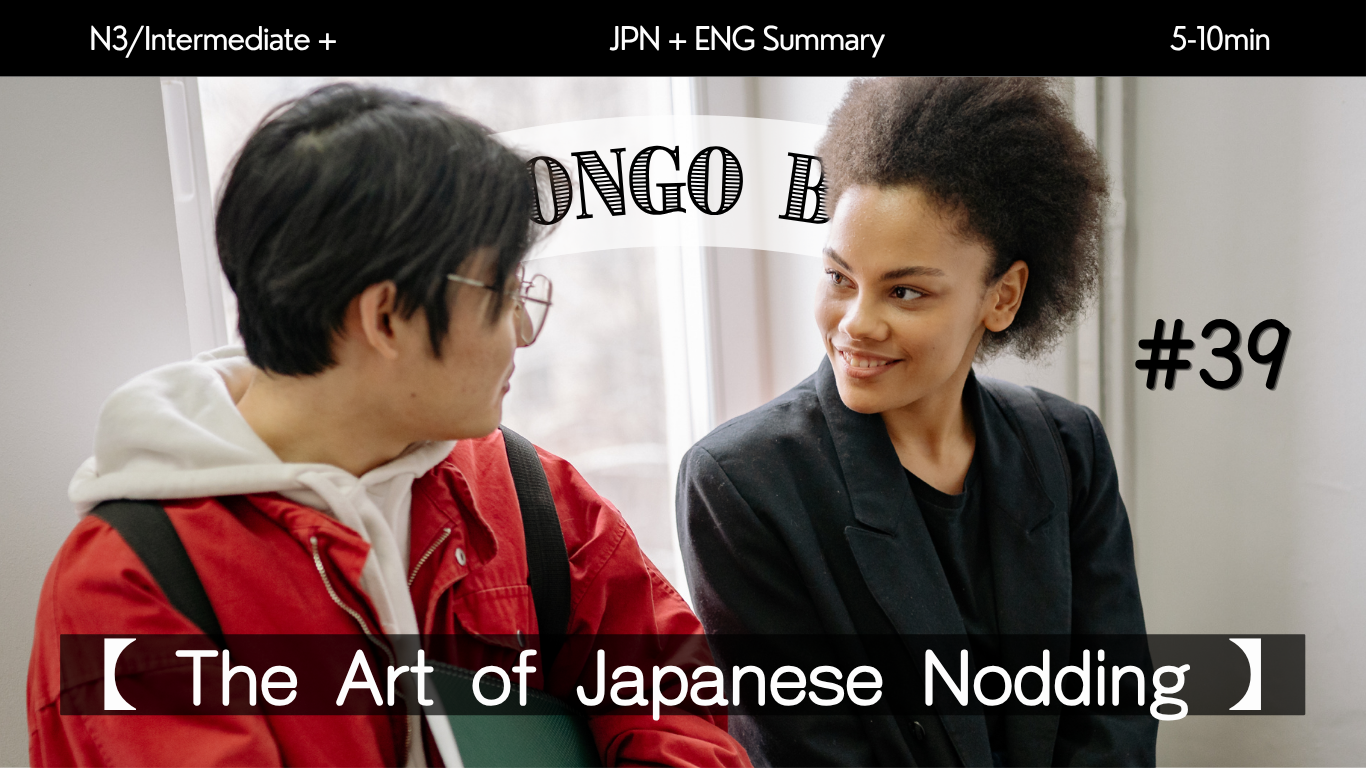

In Japan, frequent nodding and making short responses like “un-un” are essential signs of active listening.
However, these same gestures can sometimes be misinterpreted as impatience in other cultures.
日本独特(どくじ)の「相槌(あいづち)」
日本語(にほんご)を話(はな)すとき、相手(あいて)の話に合わせて「うんうん」と言(い)ったり、頭(あたま)を縦(たて)に振(ふ)ったりしていませんか?これを「相槌(あいづち)」と言います。
日本では、相槌は「あなたの話をちゃんと聞いていますよ」という安心(あんしん)を与えるための大切(たいせつ)なマナーです。日本人の会話(かいわ)を聞いていると、驚(おどろ)くほど頻繁(ひんぱん)に相槌を打(う)っているのがわかります。
海外(かいがい)での受け取(うけと)られ方
しかし、他の国ではこの「聞いています」のサインが少し違うようです。多くの国では、相手が話している間(あいだ)は「ただ静(しず)かに聞く」ことが一般的(いっぱんてき)です。
日本人のように何度も「うんうんうん」と頭を振る動作(どうさ)は、海外では「早く話を終わらせてほしい」というネガティブな意味(いみ)に取(と)られてしまうこともあるそうです。良(よ)かれと思ってやっていることが、逆(ぎゃく)の効果(こうか)を生(う)んでしまうのは驚きですよね。
違いを面白(おもしろ)がる力
外国(がいこく)の人と話していて、「あれ?反応(はんのう)が薄(うす)いな」と思(おも)ったら、それは相手が真剣(しんけん)に聞いている証拠(しょうこ)かもしれません。
こうした文化(ぶんか)の違いに違和感(いわかん)を持つのではなく、「へえ、面白いな!」と楽しむことができれば、自分の世界(せかい)はもっと広(ひろ)がるはずです。みなさん不思議に思う日本人の動作(どうさ)は何ですか?
Summary: Listening with Your Eyes or Your Voice?
While Japanese “Aizuchi” is a polite way to show engagement and empathy, it can appear restless or dismissive to those from cultures where listening is done in silence.
Recognizing that a lack of nodding isn’t necessarily a sign of boredom—and that frequent nodding isn’t always a sign of rushing—can help bridge the gap in international communication. Embracing these small behavioral differences makes the journey of learning a new language much more rewarding.
Vocab List
相槌
・Noun
・あいづち:Interjection / Nodding while listening
例 日本では、相槌を打たないで話を聞かれると、逆に怖い。
In Japan, it’s actually considered unsettling if someone listens to you without nodding or giving any verbal cues.
頻繁に
・Adverb
・ひんぱんに:Frequently
例 寝ている時に頻繁に起きてしまう。
I wake up frequently while I’m sleeping.
違和感
・Noun
・いわかん:A sense of discomfort / Feeling that something is wrong
例 大声を出したら、喉に違和感が出た。
After shouting, I felt a strange sensation in my throat.
動作
・Noun
・どうさ:Action / Movement
例 昔のロボットの動作は不自然だったけど、今のはかなり自然だ。
Older robots used to move unnaturally, but today’s are quite natural.
良かれと思って
・Expression
・よかれとおもって:With the best of intentions
例 よかれと思ってお節介をしてくる人が苦手だ。
I don’t like people who meddle in my affairs with the best of intentions.
真剣に
・Adverb
・しんけんに:Seriously / Earnestly
例 この1年かなり真剣に勉強してきたので、合格しているはずだ。
I’ve studied quite seriously this past year, so I should have passed.







Comments