
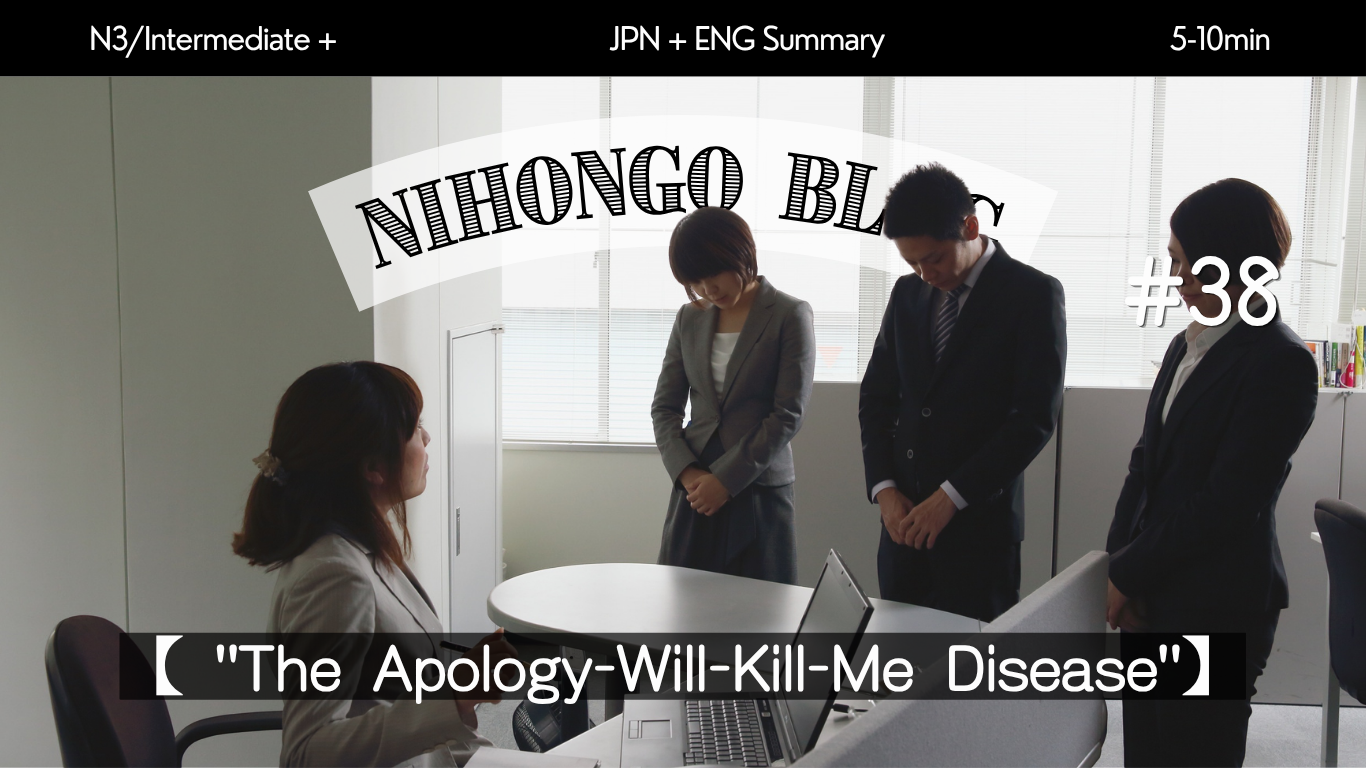

While Japanese people are often seen as quick to apologize, there is a growing social trend where some individuals refuse to say “sorry” at any cost.
This phenomenon is humorously yet critically called “The Apology-Will-Kill-Me Disease.”
謝ることは「死」と同じ!?
世の中にはたくさんの病気がありますが、最近の日本で注目されている「病」の一つが「謝ったら死ぬ病」です。
もちろん、これは本当の病気ではありません。明らかに自分が間違(まちが)っていたり、相手(あいて)に迷惑(めいわく)をかけたりしても、絶対に自分の非(ひ)を認(みと)めない人たちのことを皮肉(ひにく)を込めてこう呼びます。「謝ったら死んでしまうから、謝れないんだな」と解釈(かいしゃく)されているのです。
「謝れない」人たちの背景
私は、この「病」は一種(いっしゅ)の職業病(しょくぎょうびょう)でもあると考えています。
政治家(せいじか)や官公庁(かんこうちょう)、金融系(きんゆうけい)などのお堅(かた)い業界(ぎょうかい)では、「安易(あんい)に謝(あやま)るな」と教育(きょういく)されることもあるようです。
特に権威(けんい)のある立場(たちば)の人は、自分のプライドや立場を守るために、謝罪(しゃざい)の代わりに「論点(ろんてん)をずらす」などのテクニックを使って、相手の怒(いか)りをそらそうとします。
伝説(でんせつ)の記者会見(きしゃかいけん)
かつて、ある地方議員(ちほうぎいん)が不祥事(ふしょうじ)を起こした際、記者会見で子どものように大泣きし、逆(ぎゃく)ギレして世間(せけん)を唖然(あぜん)とさせたことがありました。
これこそが「謝ったら死ぬ病」の典型(てんけい)です。もし最初に「申し訳(もうしわけ)ございません」と素直(すなお)に謝っていれば、事態(じたい)はもっと早く収(おさ)まっていたはずです。しかし、彼は謝る代わりに感情(かんじょう)を爆発(ばくはつ)させ、結果(けっか)として大炎上(だいえんじょう)してしまいました。
みなさんの国にも、このような面白い、あるいは困(こま)った社会的(しゃかいてき)な「病」はありますか?
Summary: The Difficulty of Saying Sorry
“The Apology-Will-Kill-Me Disease” describes people in high-stakes or rigid professions who feel that admitting a mistake is a sign of fatal weakness.
Instead of a simple “I’m sorry,” they use complex tactics like shifting the topic or, in extreme cases, reacting with irrational anger to deflect blame. This behavior often backfires, turning a small mistake into a major public scandal.
It serves as a reminder that in many cases, a sincere apology is the most effective way to resolve a conflict.
Vocab List
職業病
・Noun
・しょくぎょうびょう:Occupational disease (fig. habits from work)
例 人を見たら、「いらっしゃいませ」と言ってしまうのは職業病だ。
It’s an occupational hazard that I find myself saying “Welcome” to everyone I see.
不祥事
・Noun
・ふしょうじ:Scandal / Misconduct
例 世間は、政治家や芸能人の不祥事にはとても厳しい。
Public opinion is very harsh when it comes to scandals involving politicians and celebrities.
唖然とします
・Expression
・あぜんとします:To be dumbfounded / To be aghast
例 台風で家が無くなって、唖然としてどうしたらいいかわからなかった。
My house was destroyed by the typhoon, and I was stunned and didn’t know what to do.
逆ギレ
・Noun
・ぎゃくぎれ:Getting angry at the person who has a right to be angry at you
例 嘘をついて相手を怒らせたのに、「嘘をつかせるあなたが悪い」と逆切れした。
He lied and angered the other person, but then he got angry and said, “It’s your fault for making me lie.”
収まります
・Verb G1
・おさまります:To be settled / To calm down
例 ムカついても、6秒数えたら怒りが収まるらしい。
Apparently, even if you’re annoyed, counting to six will calm your anger.
論点をずらします
・Expression
・ろんてんをずらします:To shift the point of the argument
例 口論をしていたけど、論点をずらして責められずに済んだ。
We were arguing, but I managed to shift the topic and avoid being blamed.



Comments