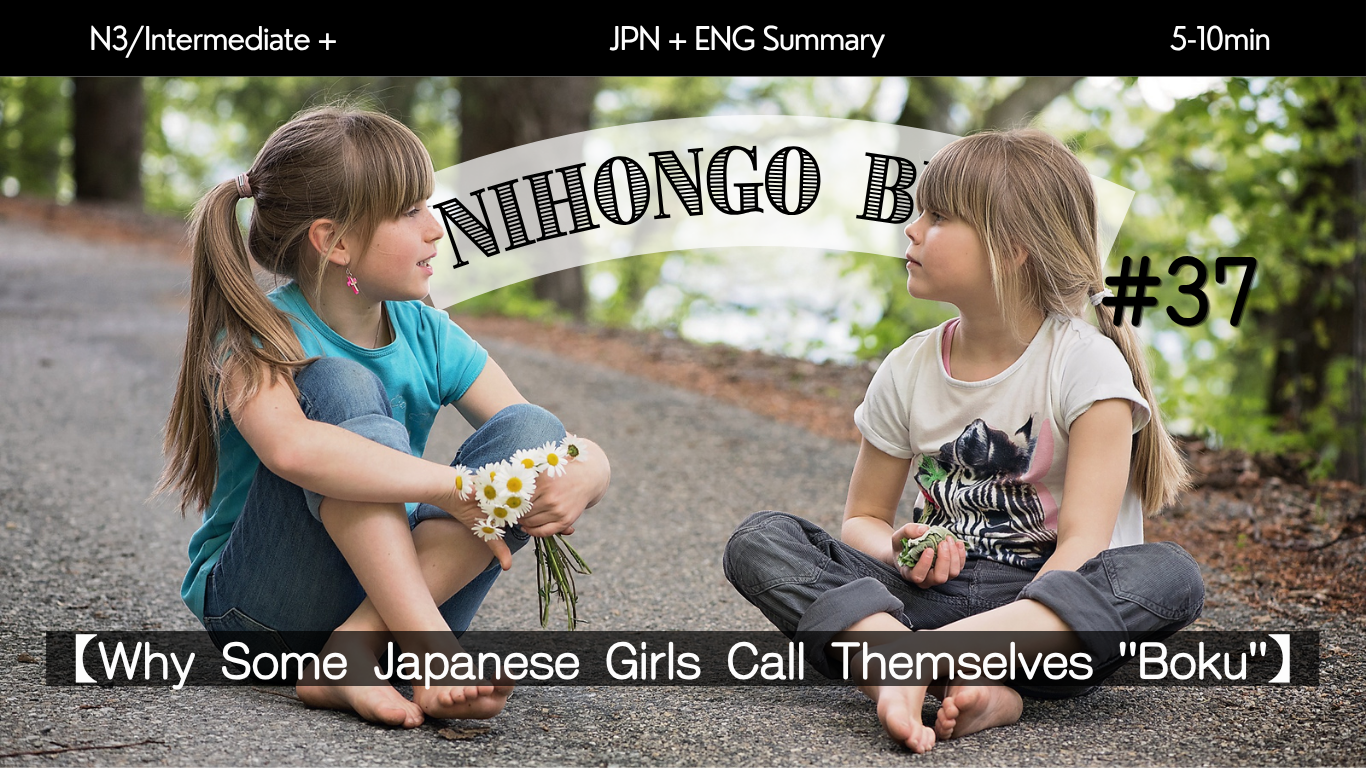

Did you know that Japanese first-person pronouns can change based on gender, age, and social status?
Lately, a unique trend is emerging where some women choose the traditionally masculine “Boku” to express their true selves.

日本語の多様(たよう)な一人称(いちにんしょう)
日本語を勉強しているみなさんは、一人称を使い分けるのが大変(たいへん)だと感じたことはありませんか?
特に男性(だんせい)はバリエーションが多いですが、女性(じょせい)も「わたし」「うち」「自分の名前」など、相手(あいて)や場面(ばめん)によって柔軟(じゅうなん)に使い分けます。これらは家族(かぞく)や友達(ともだち)との距離感(きょりかん)、年齢(ねんれい)、立場(たちば)などの要素(ようそ)で決まります。
「ボク」を使う女の子たちの登場(とうじょう)
一般的(いっぱんてき)に「ぼく」は幼(おさな)い男の子や、優(やさ)しい雰囲気(ふんいき)の男性が使う一人称です。しかし最近(さいきん)、トランスジェンダーではない女性でも、あえて「ぼく」を使う人が増(ふ)えてきました。
彼女(かのじょ)たちは女性としての自認(じにん)がありますが、「ボク」という言葉を使うことが一番自分らしい(じぶんらしい)と感じているのです。
日本語教師(にほんごきょうし)としての視点(してん)
私は日本語教師として、この変化(へんか)を「言葉(ことば)の乱(みだ)れ」だとは思いません。日本語は、「自分の気持ちを細(こま)かく正確(せいかく)に表現(ひょうげん)したい」という情熱(じょうねつ)にあふれた言葉です。
もし自分にぴったり合う言葉がなければ、とてもしんどい思いをするでしょう。自分を表(あらわ)す言葉を選(えら)ぶ自由(じゆう)は、常に(つねに)新しい限界(げんかい)に挑戦(ちょうせん)しているかのようで、とても素敵(すてき)なことだと思います。
Summary: Finding Your Voice
In Japanese, choosing a first-person pronoun is a deeply personal act of self-expression.
While “Boku” was traditionally reserved for males, its increasing use among women shows that language is evolving to prioritize personal comfort and identity over rigid social norms.
This trend highlights the unique characteristic of the Japanese language: the pursuit of finding the most precise word to convey one’s true inner self.
Vocab List
一人称
・Noun
・いちにんしょう:First-person pronoun
例 日本語の一人称はたくさんある
There are many first-person pronouns in Japanese.
使い分けます
・Verb G2
・つかいわけます:To use differently depending on the situation
例 表現の丁寧さは人によって使い分けます
The level of politeness in expression varies from person to person.
柔軟に
・Adverb
・じゅうなんに:Flexibly
例 急な問題にも柔軟に対応する
I respond flexibly to sudden problems.
自認
・Noun
・じにん:Self-identification
例 私は日本人を自認している
I identify as Japanese.
乱れ
・Noun
・みだれ:Disorder / Corruption (of language)
例 中学の先生は、服装の乱れは心の乱れとよく言っていた
My Junior Highschool teacher often said that disheveled clothing reflected a disheveled mind.
しんどい
・i-adj
・しんどい:Tiring / Emotionally taxing
例 山登りはしんどいからしたくない
I don’t want to climb mountains because it’s too hard.








Comments