
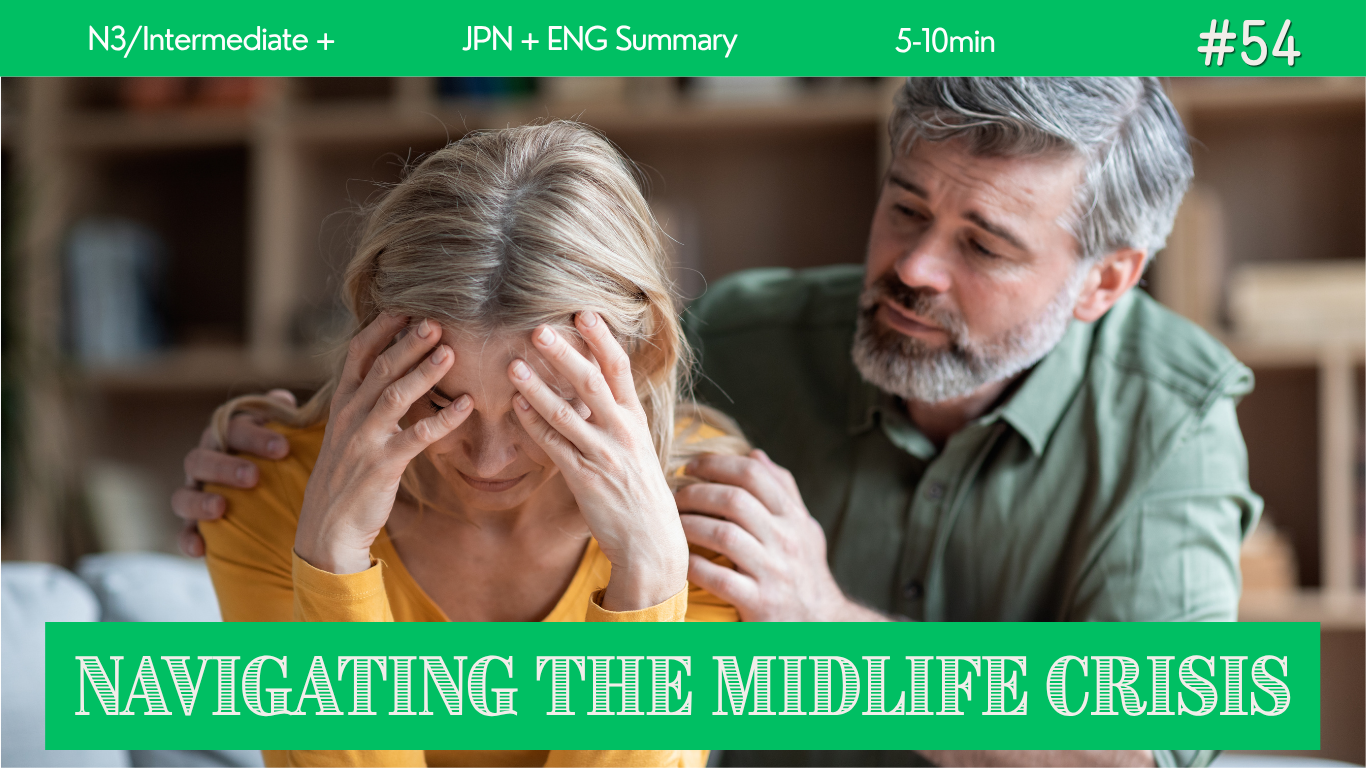

A midlife crisis can bring feelings of anxiety and emptiness as we face physical and social changes in our 40s and 50s. However, learning to accept these shifts and viewing them as a fresh start can help us overcome this challenging period with strength.
ミッドライフクライシスとは何か?
みなさんは「ミッドライフクライシス(中年期(ちゅうねんき)の危機)」という言葉(ことば)を聞(き)いたことがありますか?
これは40代(だい)から50代にかけて、体(からだ)の変化(へんか)や、仕事(しごと)・家庭(かてい)での役割(やくわり)の大きな変化にともなって起こる心の悩(なや)みのことです。自分を認(みと)める気持ち(自己肯定感)が下がってしまったり、心の中にぽっかり穴(あな)があいたような虚無感(きょむかん)や不安(ふあん)が強(つよ)くなったりして、「これからどう生きていけばいいのだろう」と悩んでしまう状態(じょうたい)を言います。
体と心の変化に「不調(ふちょう)をきたす」理由(りゆう)
変化の一つとして、大きなものが「体(からだ)」の変化です。その代表(だいひょう)が更年期障害(こうねんきしょうがい)です。
女性であれば閉経(へいけい)にともなうホルモンの変化、そして男性であっても年齢(ねんれい)を重ねることによってホルモンの量が減(へ)っていきます。これにより、自分の意思(いし)とは関係なく、体や精神(せいしん)に不調(ふちょう)をきたしてしまうのです。
今まで通(とお)りのがんばり方や、若いころと同じ「自分の扱い方(あつかいかた)」が一切(いっさい)通用(つうよう)しなくなるのが、この時期(じき)の特徴(とくちょう)です。
「ピンチはチャンス」のしたたかさで
この大変な時期を乗り越えるための肝(きも)は、変化した今の自分を「いかに受け入れて切り替えるか」にあります。
もちろん、これは「言うは易(やす)し行うは難(かた)し(=口で言うのは簡単(かんたん)だが、実際にやるのは難しい)」の典型(てんけい)です。頭(あたま)では分かっていても、心が追(お)いつかないことも多いでしょう。
しかし、だからこそ冷静(れいせい)に今の自分を見つめ直し、「ピンチはチャンス」だと思えるくらいのしたたかさを持って、しなやかに乗り越えられたら最高(さいこう)ですね。新しい人生のスタートとして、自分をアップデートしていくチャンスなのかもしれません。
みなさんの国では、40代や50代の心の変化についてよく話し合われていますか?
Summary: Accepting the New Self
A midlife crisis, often triggered by hormonal imbalances like menopause in both men and women, forces individuals to realize that their old ways of managing stress and health no longer work. While navigating these physical and emotional struggles is easier said than done, the key to overcoming them lies in self-acceptance. By calmly analyzing our current situation and adopting a resilient, clever mindset that views a “crisis as a chance,” we can transform this period into a meaningful transition for the next chapter of life.
Vocab List
自己肯定感
・Noun
・じここうていかん:Self-esteem
例 自己肯定感が高い人は失敗からの立ち直りが早い。
People with high self-esteem recover quickly from failures.
虚無感
・Noun
・きょむかん:Sense of emptiness / Nihility
例 台風で全て無くなった、絶望感と虚無感でいっぱい。
The typhoon destroyed everything; I’m filled with despair and emptiness.
更年期障害
・Noun
・こうねんきしょうがい:Menopausal symptoms / Midlife health issues
例 最近、女性だけでなく、男性の更年期障害にも焦点があてられている。
Recently, attention has been focused not only on menopause in women, but also on men.
不調をきたす
・Expression
・ふちょうをきたす:To cause a malfunction / To fall into bad condition
例 猛暑が続いて、体調に不調をきたす人が続出した。
The intense heat continued, causing a surge in people experiencing health problems.
通用します
・Verb G3
・つうようします:To pass / To hold good / To be applicable
例 大阪弁は海外でも通用すると友達が言っていた。
My friend told me that the Osaka dialect is understandable overseas.
肝
・Noun
・きも:The key point / The crux (literally: liver/guts)
例 人間関係の肝はコミュニ―ケーションだ。
The key to human relationships is communication.
言うは易し行うは難し
・Expression
・いうはやすしおこなうはかたし:Easier said than done
例 ライフハックはいろいろあるけど、わかってはいるが、”言うは易し行うは難し”なんだよね!
There are all sorts of life hacks, and I know they’re good, but they’re easier said than done!
典型
・Noun
・てんけい:Typical example / Pattern
例 残業もして、土日も出勤して、あの人は働きバチの典型だ。
He works overtime and even comes in on weekends; he’s the epitome of a workaholic.
したたかさ
・Noun / したたかな Na-adj
・したたかさ:Toughness / Shrewdness / Resilience
例 彼女は大人に従順にみえて、かなりのしたたかさがあるよ。
She may seem obedient to adults, but she’s actually quite shrewd.







Comments