
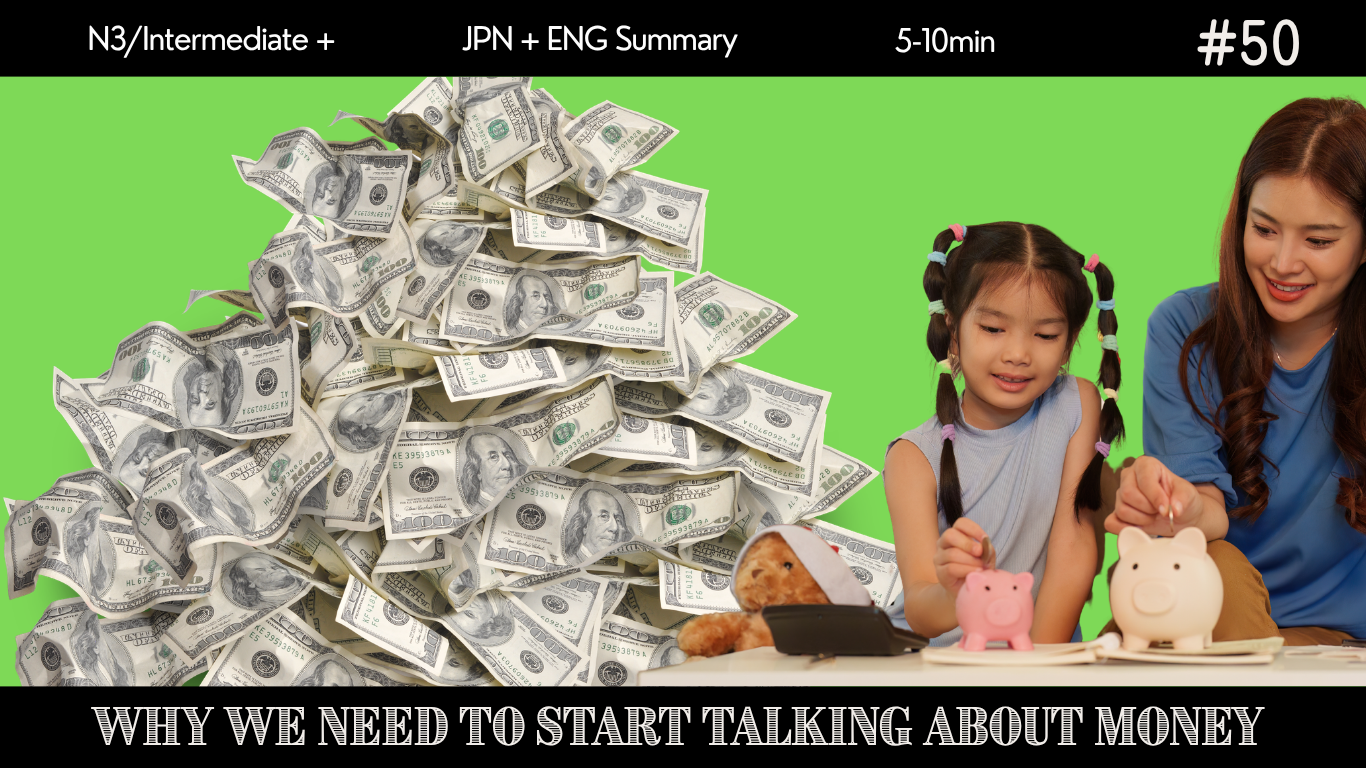

While Japan is historically known for avoiding open discussions about money, financial literacy has become an essential survival skill in modern society.
Let’s look at why money education was missing in the past and why it is crucial for the younger generation today.
日本人は「金融(きんゆう)リテラシー」が低い?
最近(さいきん)、いろいろな場面(ばめん)で「〇〇リテラシー」という言葉(ことば)をよく耳(みみ)にします。リテラシーとは、「正しい知識(ちしき)を身につけて、その良し悪し(よしあし)を自分で判断(はんだん)する力(ちから)」のことです。
よく「日本人は金融リテラシーが低い」と言われます。その理由(りゆう)として、日本では昔から「お金のことを考えるのは卑(いや)しい(=上品ではない)」という考え方が根底(こんてい)にあるからだと言われています。
しかし、これは半分(はんぶん)本当で、半分は嘘(うそ)だと私は思います。日本にも素晴らしい商売人(しょうばいにん)はたくさんいますし、例えば大阪(おおさか)は「商人の町(まち)」として有名で、大阪人はお金の話が大好きだというステレオタイプもあるくらいです。
学校(がっこう)や家庭(かてい)での「お金の教育(きょういく)」
では、なぜリテラシーが低いと言われてしまうのでしょうか。それは、実際の生活(せいかつ)に役立(くだ)つ「お金の教育」を受ける機会(きかい)がなかったからです。
実際、私が子供(こども)のころは、義務教育(ぎむきょういく)や高校(こうこう)でお金の仕組みについて教わることはありませんでした。大学の経済学部(けいざいがくぶ)などで学ぶのは、あくまで「学問(がくもん)としてのお金」であり、個人のリテラシーを高めるものではありません。
また、家庭内(かていない)でも「子どもはお金の心配(しんぱい)をせず、すくすく育ってほしい」と願う親(おや)が多く、あえてお金の話を避(さ)ける傾向(けいこう)がありました。もちろん、これは親の優しさ(やさしさ)であり、良かれと思ってのことでした。
これからの社会を「生き延びる」ために
しかし、金融リテラシーが低いままで大人になると、現代社会を生き延びることが難(むずか)しくなってきます。特に今は、18歳(さい)から親の同意(どうい)なしで様々な契約(けいやく)を結(むす)べるようになったため、若い人たちが詐欺(さぎ)の被害(ひがい)に遭(あ)うことが懸念(けねん)されています。
お金の知識は、大人になれば自然(しぜん)に身につくものではありません。私も自分のリテラシーの低さを痛感(つうかん)することがあります。これからは、自分が「どう生きていきたいか」という人生(じんせい)の戦略(せんりゃく)を考えながら、上手(じょうず)にお金と付き合っていきたいですね。
みなさんの国では、子どものころからお金の教育がありますか?どのようにして金融リテラシーを身につけていますか?
Summary: Money as a Survival Tool
In Japan, financial education was traditionally left out of compulsory schooling, largely due to a cultural hesitation to discuss wealth openly. However, as the legal adulthood age has shifted to 18, the lack of money management skills poses a real risk, leaving young adults vulnerable to financial scams. Financial literacy is no longer just an academic topic, but a practical survival strategy for personal growth. To navigate modern life successfully, it is becoming increasingly necessary to actively learn how to manage and respect money.
Vocab List
金融リテラシー
・Noun
・きんゆうりてらしー:Financial literacy
例 金融リテラシーが同(おな)じくらいなら、結婚(けっこん)してもうまくいきそう。
If two people have similar levels of financial literacy, their marriage is likely to work out.
卑しい
・i-adj
・いやしい:Vulgar / Greedy / Lowly
例 麺(めん)を食べる時、音(おと)を立ててすするのは大丈夫(だいじょうぶ)だが、ご飯(はん)を食べるときにくちゃくちゃ音をたてるのは卑しい。
It’s okay to slurp noodles, but it’s considered vulgar to chew loudly while eating a meal.
根底
・Noun
・こんてい:Root / Foundation
例 A国とB国の首脳(しゅのう)は笑顔(えがお)で握手(あくしゅ)をしているが、根底には憎(にく)しみがある。
The leaders of Country A and Country B are shaking hands with smiles on their faces, but at the root of it all is hatred.
義務教育
・Noun
・ぎむきょういく:Compulsory education
例 義務教育で学(まな)んだことは大人(おとな)になって意外(いがい)と役(やく)に立(た)つ。
What you learn in compulsory education can be surprisingly useful in adulthood.
良かれと思って
・Expression
・よかれとおもって:With the best of intentions
例 祖母(そぼ)はいつも、よかれと思ってたくさん料理(りょうり)を作(つく)ってくれるが、食(た)べきれない。
My grandmother always cooks a lot of food with good intentions, but we can never eat it all.
生き延びます
・Verb G2
・いきのびます:To survive
例 リーマンショックを生き延びた人たちは逞(たくま)しい。
Those who survived the Lehman Shock are resilient.
懸念されます
・Verb G2 *懸念します は 受身形[懸念されます]で使われることが多い。[懸念します]is often used in the passive voice as[懸念されます]
・けねんされます:To be feared / To be a cause for concern
例 近年(きんねん)、南海(なんかい)トラフ地震(じしん)の発生(はっせい)が懸念されています。
In recent years, there have been concerns about the occurrence of a Nankai Trough earthquake.
痛感します
・Verb G3
・つうかんします:To feel keenly / To fully realize
例 離婚(りこん)してから、独(ひと)り身(み)の寂(さみ)しさを痛感します。
Since getting divorced, I’ve really come to feel the loneliness of being single.
付き合います
・Verb G1
・つきあいます:To deal with / To manage (also means to date/keep company with)
例 子どもが自転車(じてんしゃ)に乗(の)れるまで、根気(こんき)よく付き合います。
I will patiently support my child until they can ride a bicycle.



Comments