
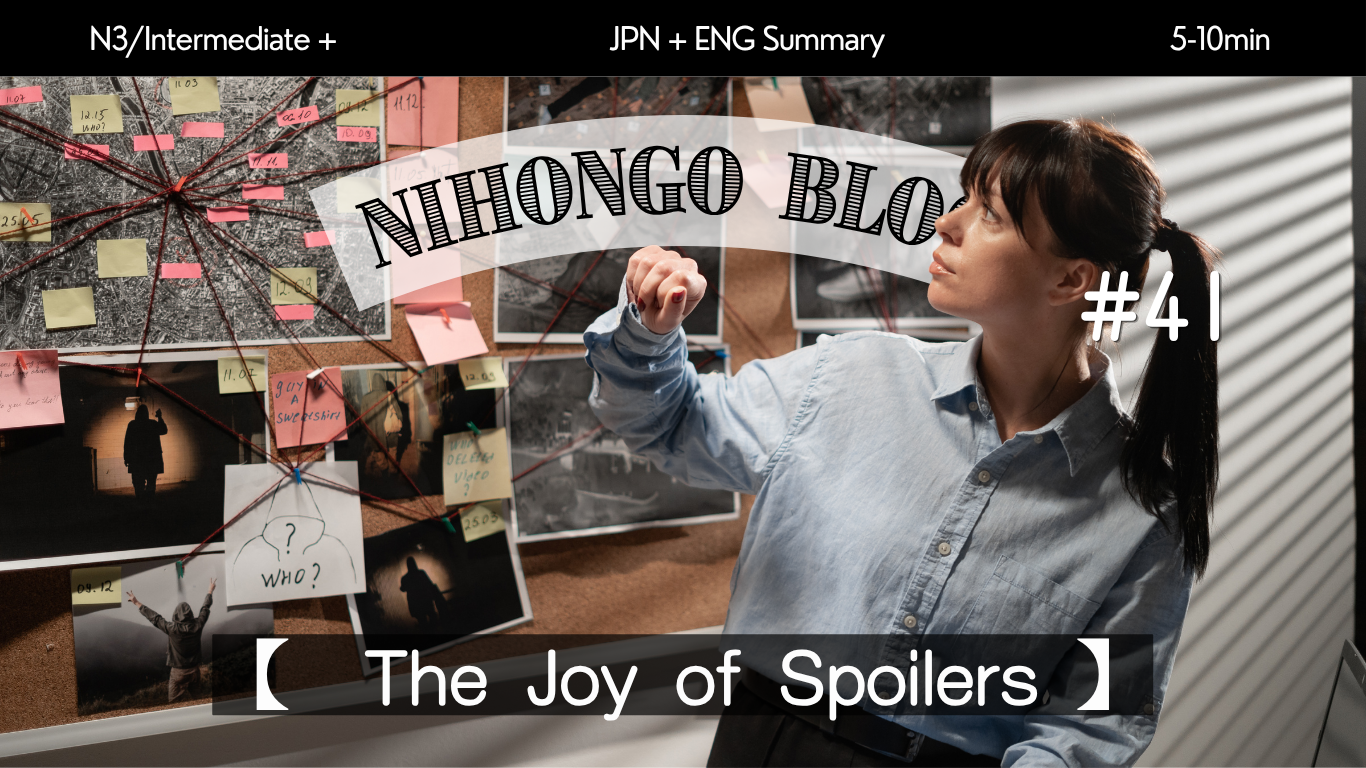

While many people dread spoilers, some prefer knowing the plot before diving into a story.
Today, I’ll share why being a “spoiler advocate” can actually deepen your appreciation for movies and traditional Japanese arts.
私は「ネタバレ肯定派(こうていは)」です
みなさんは、映画(えいが)やドラマを見る前に結末(けつまつ)を知りたいですか?私は「ネタバレ肯定派」です。
映画を見るときは、事前(じぜん)に口コミやあらすじを確認(かくにん)しておきます。ストーリーがわかった状態(じょうたい)で見るほうが、より深(ふか)く作品(さくひん)を楽しめるからです。
日本の伝統芸能(でんとうげいのう)とネタバレ
日本には、歌舞伎(かぶき)や落語(らくご)といった素晴らしい伝統芸能があります。これらは、言(い)わば「究極(きゅうきょく)のネタバレ・エンタメ」です。
同じ演目(えんもく)が何百年(なんびゃくねん)も繰(く)り返(かえ)し演(えん)じられていて、誰もが内容を知っています。むしろ、しっかりと予習(よしゅう)をしてストーリーを分かっているほうが、役者(やくしゃ)の技(わざ)や演出(えんしゅつ)をより深く楽しむことができるのです。
ドキドキ感か、それとも「裏切り」か
もちろん、何も知らない状態で見る「初見(しょけん)」のドキドキ感や臨場感(りんじょうかん)も魅力的(みりょくてき)です。
しかし、それと天秤(てんびん)にかけても、私はある程度(ていど)の内容を知った上で見たいと思います。内容を分かっていながら、それでも良い意味で予想を裏切(うらぎ)られる楽しさを期待(きたい)しているのかもしれません。
みなさんは、ネタバレなしで驚(おどろ)きたいですか?それとも、内容を知ってからじっくり楽しみたいですか?
Summary: Pre-studying the Story
In Japan, traditional arts like Kabuki and Rakugo are built on the idea that knowing the story beforehand allows you to focus on the performance’s nuances. While watching a movie without spoilers offers a unique thrill of discovery, many find that a basic understanding of the plot provides a sense of security and a deeper intellectual engagement.
Whether you seek the shock of the unknown or the comfort of a well-known tale, both styles reflect different ways of connecting with art and storytelling.
Vocab List
肯定派
・Noun
・こうていは:In favor of / Pro-side
例 海外留学肯定派ですが、お金がなくて行けない。
I’m a supporter of studying abroad, but I can’t go because I don’t have the money.
あらすじ
・Noun
・あらすじ:Summary / Synopsis
例 あらすじや時代背景を知ってから見るとより深く理解できる。
You can understand it more deeply if you watch it after learning about the plot and historical context.
ネタバレ
・Noun
・ネタバレ:Spoiler / something that spoils the ending of a story or movie.
例 彼氏はいつもネタバレをしてくる。
My boyfriend always spoils things for me.
伝統芸能
・Noun
・でんとうげいのう:Traditional performing arts
例 どの国にも伝統芸能がある。
Every country has its own traditional performing arts.
演目
・Noun
・えんもく:Program / Repertoire (in theater)
例 バレエで一番好きな演目はくるみ割り人形だ。
My favorite ballet is The Nutcracker.
予習
・Noun
・よしゅう:Preview / Preparation (for a lesson or event)
例 いつも予習をしてから日本語のレッスンを受ける。
I always prepare before taking my Japanese lessons.
初見
・Noun
・しょけん:Seeing for the first time
例 何も情報を入れず、初見で見る映画が最高だ。
Watching a movie for the first time without any prior information is the best.
臨場感
・Noun
・りんじょうかん:Sense of presence / Realism
例 4Dで見る映画は臨場感が半端ない。
Watching a movie in 4D is incredibly immersive.
天秤にかけます
・Expression
・てんびんにかけます:To weigh (two things) against each other
例 留学先を治安の良さか生活費の安さで天秤にかける。
When choosing a study abroad destination, I weigh safety against the cost of living.
裏切ります
・Verb G1
・うらぎります:To betray / To go against expectations
例 ここの料理はいつもいい意味で私の期待を裏切ってくる。
The food here always exceeds my expectations in a good way.


Comments