
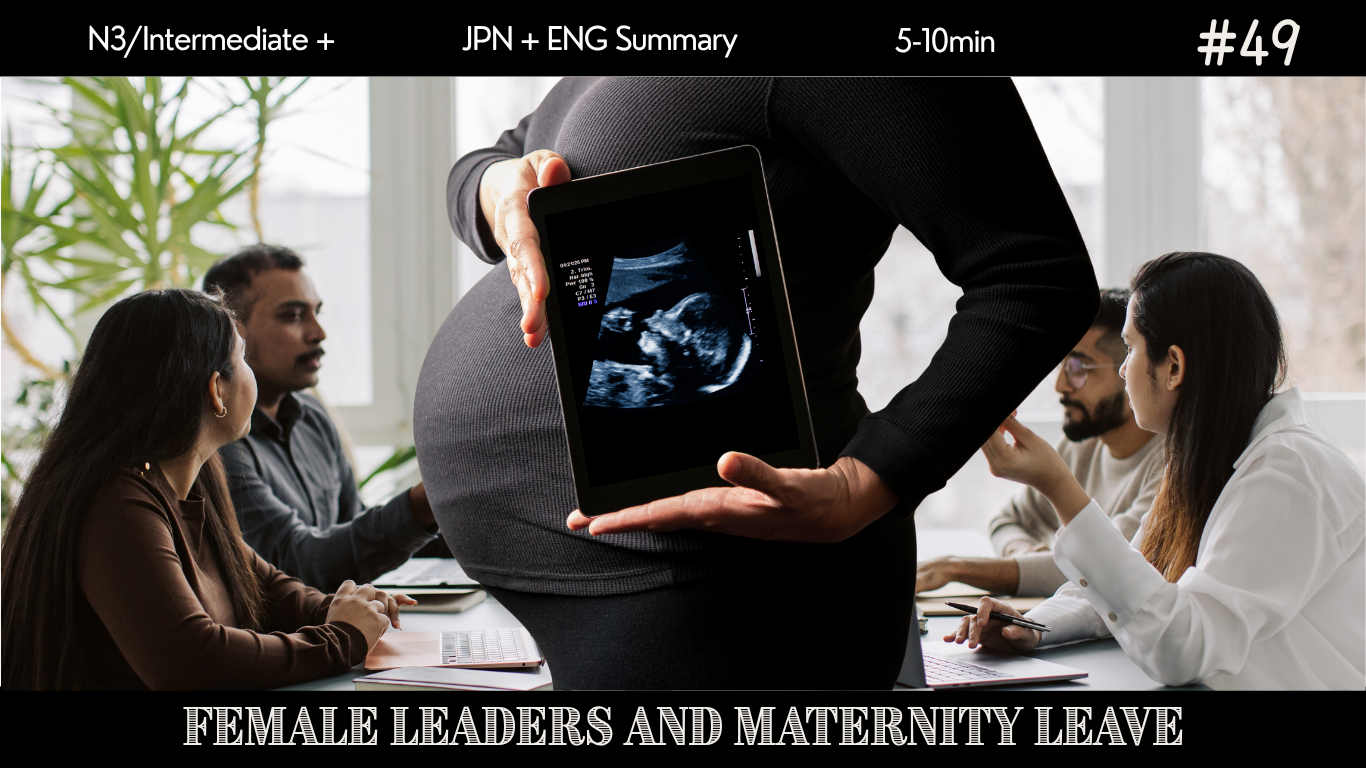

As more female leaders step into powerful roles in Japan, society faces new institutional challenges.
The recent news of a female mayor taking maternity leave highlights the urgent need for flexible backup systems in governance.
女性(じょせい)リーダーの誕生(たんじょう)と新しい壁(かべ)
近年(きんねん)、世界中(せかいじゅう)で多くの女性リーダーが誕生(たんじょう)しています。日本でも女性の首相(しゅしょう)が誕生するなど、社会は少しずつ変化(へんか)していますが、同時に女性ならではの新しい問題にも直面(ちょくめん)しています。
今、京都府(きょうとふ)八幡市(やわたし)の市長(しちょう)が産休(さんきゅう)を取得(しゅとく)することが発表され、世論(せろん)が沸(わ)いています。
政治(せいじ)の世界に足りないルール
日本の一般企業(いっぱんきぎょう)では、産前(さんぜん)6週間・産後(さんご)8週間という産休のシステムが広く浸透(しんとう)しています。しかし、政治の世界、特に「市や県のトップ」に女性が就(つ)くことを想定(そうてい)したルールは、これまで十分に作られていませんでした。そのため、今回の産休取得は話題(わだい)になっているのです。
初(はじ)めてのケースなので、具体的にどのくらい休むのかなど、まだ決まっていない部分(ぶぶん)も多いようです。しかし、このような状況(じょうきょう)をあらかじめ想定して、新しく制度(せいど)を整(ととの)えていくことには大きな意義(いぎ)があります。
ジェンダー論(ろん)ではなく「リスクヘッジ」として考える
個人的(こじんてき)には、同じようなケースは男性であれ女性であれ起こり得ると思っています。例えば病気(びょうき)や怪我(けが)などで突然(とつぜん)公務(こうむ)ができなくなることは誰にでも起こる可能性(かのうせい)があります。
したがって、誰(だれ)がトップになっても、一時的に不在(ふざい)のときはしっかりとバックアップができる仕組みを作っておくことが、リスクヘッジとして非常に大切(たいせつ)です。「男性か」「女性か」という思想(しそう)の対立(たいりつ)するのではなく、冷静(れいせい)に状況を分析(ぶんせき)して、社会の仕組みをアップデートしていくことが現実的だと思います。
みなさんの国では、政治家やリーダーが産休を取るためのルールはありますか?
Summary: Institutionalizing Backup Systems
The controversy surrounding a Japanese mayor taking maternity leave reveals that the nation’s political regulations were never designed with female top executives in mind. While maternity leave is common in corporate Japan, applying it to public servants requires creating brand-new precedents. Rather than framing this purely as an ideological gender debate, it is more practical to view it as a matter of crisis management, ensuring that solid backup structures exist whenever any leader becomes temporarily unable to perform their duties.
Vocab List
産休
・Noun
・さんきゅう:Maternity leave (short for 産前産後休業/さんぜんさんごきゅうぎょう)
例 最近(さいきん)では、女性(じょせい)だけでなく、男性(だんせい)も産休を取(と)ることが一般的(いっぱんてき)になっています。
Recently, it has become common for men, as well as women, to take paternity leave.
世論が沸く
・Expression
・せろん / よろん がわく:Public opinion is stirred up / Much debated by the public
例 反対(はんたい)、賛成(さんせい)など色々(いろいろ)な意見(いけん)が活発(かっぱつ)に交(か)わされることを世論が沸くと言う。
When a variety of opinions—both for and against—are actively exchanged, we say that public opinion is in an uproar.
浸透します
・Verb G3
・しんとうします:To permeate / To become widely recognized or accepted
例 最近(さいきん)、大阪弁(おおさかべん)が日本中(にほんじゅう)に浸透してきた。
Recently, the Osaka dialect has become widespread throughout Japan.
想定します
・Verb G3
・そうていします:To assume / To presuppose
例 自宅(じたく)での避難(ひなん)を想定して、災害対策(さいがいたいさく)を講(こう)じる。
Take disaster preparedness measures with the assumption that you will evacuate to your home.
意義
・Noun
・いぎ:Significance / Meaning / Worth
例 子どもから人に親切(しんせつ)にすることに何(なん)の意義があるのかと聞(き)かれて困(こま)った。
My child asked me what the point of being kind to others was, and I didn’t know how to answer.
公務
・Noun
・こうむ:Official business / Public duties
例 首相(しゅしょう)は公務の合間(あいま)に、トイレに行(い)くこともできないくらい忙(いそが)しい。
The prime minister is so busy that he doesn’t even have time to go to the bathroom between official engagements.
リスクヘッジ
・Noun
・りくすへっじ:Risk hedge / Mitigating potential risks
例 良質(りょうしつ)なコミュニケーションを取(と)ることは人間関係(にんげんかんけい)における最大(さいだい)のリスクヘッジだ。
Effective communication is the best way to mitigate risks in relationships.
対立します
・Verb G3
・たいりつします:To confront / To oppose each other
例 隣国(りんごく)が対立するのはよくあることだ。
It’s common for neighboring countries to be in conflict.





Comments