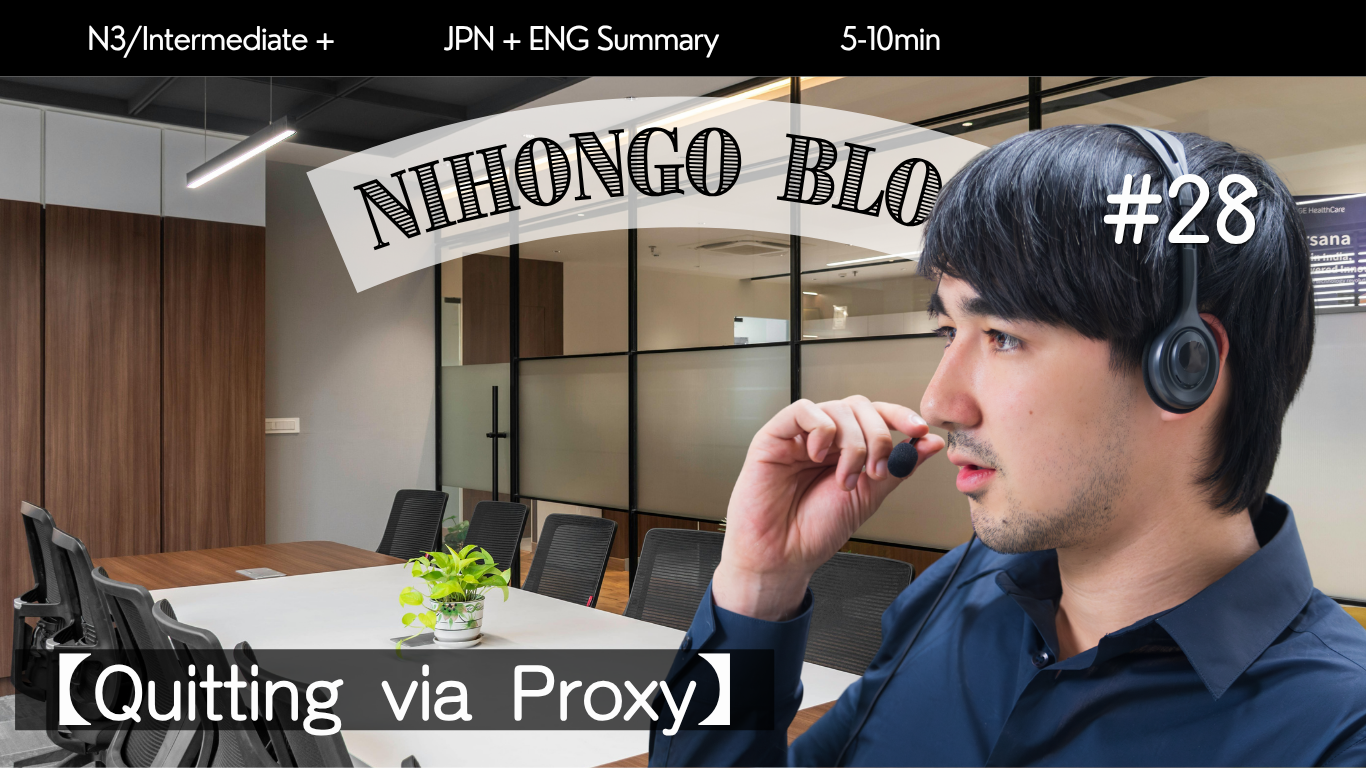

In Japan, a unique service called “Taishoku Daiko” allows employees to resign through a proxy instead of facing their boss.
While controversial, this business is growing as a solution for those trapped in difficult work environments.

退職代行(たいしょくだいこう)サービスとは?
仕事を辞(や)めるときのマナーや常識(じょうきき)は、国によって違(ちが)うかもしれません。 日本では約10年前に、本人に代わって会社に「辞めます」と伝え、手続きまで代行(だいこう)してくれるサービスが生まれました。
日本の法律(ほうりつ)では、本人が辞めたいと言えば会社はそれを止めることはできません。しかし、実際(じっさい)には上司に「裏切(うらぎ)り者だ」と言われたり、強引(ごういん)に引き止められたりして、辞めにくいケースが多いのです。
なぜこのサービスが広がっているのか
背景(はいけい)には、日本の深刻(しんこく)な労働問題(ろうどうもんだい)があります。特に「ブラック企業」では、辞めようとする人を「社会不適合者(しゃかいふてきごうしゃ)」だと洗脳(せんのう)することもあります。
また、最近の若い世代(せだい)は、対面(たいめん)での厳しいコミュニケーションを避(さ)けたいと考える傾向(けいこう)があるため、このサービスを利用する人が増えています。
賛否両論(さんぴりょうろん)の意見
このサービスには、さまざまな意見(いけん)があります。
- 賛成(さんせい)の意見: 面倒(めんどう)な人間関係や手続きに悩(なや)まされることなく、すぐに仕事を辞めることができる。精神的(せいしんてき)なストレスから自分を守るための良い手段(しゅだん)である。
- 反対(はんたい)の意見: 「責任感(せきにんかん)がない」という悪い印象(いんしょう)を次の会社に与(あた)えてしまう恐(おそ)れがある。最後くらいは自分で伝えるべきだ、という伝統的(でんとうてき)な考え方も根強(ねづよ)いです。
みなさんは、仕事を辞める時にこのような代行サービスを使いたいと思いますか?
Summary: A Reflection of Modern Work Life
“Taishoku Daiko” highlights a shift in how the younger generation handles workplace conflict in Japan.
Proponents argue it provides a necessary escape from toxic “black companies” and mental distress. Critics, however, worry that avoiding a direct resignation shows a lack of responsibility.
Ultimately, this service reflects the deep-seated pressures of Japanese corporate culture and the evolving nature of professional communication.
Vocab List
退職
・Noun
・たいしょく:Resignation / Quitting a job
例 父は退職したら世界一周旅行に行きたいらしい。
It seems my dad wants to go on a trip around the world once he retires.
代行
・Noun
・だいこう:Proxy / Acting on behalf of someone
例 最近では「買い物代行」や「退職代行」など、色々な代行業が流行している。
Recently, various types of agency services—such as “shopping代行” and “resignation代行”—have become popular.
賛否両論
・Noun
・さんぴりょうろん:Arguments for and against / Controversial
例 新しいサービスには常に賛否両論がある。
There are always mixed reactions to new services.
洗脳
・Noun
・せんのう:Brainwashing
例 学生時代は、朝起きて仕事に行くというのは一種の洗脳だと思ってた。
When I was a student, I used to think that getting up in the morning and going to work was a form of brainwashing.
不適合
・Noun
・ふてきごう:Maladjustment / Unfitness
例 よく遅刻していたので、友達からは社会不適合者だとからかわれた。
I was always late, so my friends teased me, calling me a misfit.
対面
・Noun
・たいめん:Face-to-face
例 オンラインレッスンより対面レッスンのほうが集中できるという人もいる。
Some people say they can concentrate better in in-person lessons than in online lessons.
介入
・Noun
・かいにゅう:Intervention
例 家庭内のトラブルに、警察は介入できない。
The police cannot intervene in domestic disputes.
傾向
・Noun
・けいこう:Trend / Tendency
例 夕方になると頭がすっきりする傾向にある。
I tend to feel more clear-headed in the evening.
責任感
・Noun
・せきにんかん:Sense of responsibility
例 上司は責任感が強く、失敗してもいいからチャレンジしろと言ってくれるので安心して仕事ができる。
My boss has a strong sense of responsibility and encourages me to take on new challenges even if I make mistakes, which allows me to work with peace of mind.
根強い
・i-adj
・ねづよい:Deep-seated / Persistent
例 ここには昔ながらの文化が根強く残っている。
Traditional culture remains deeply rooted here.






Comments