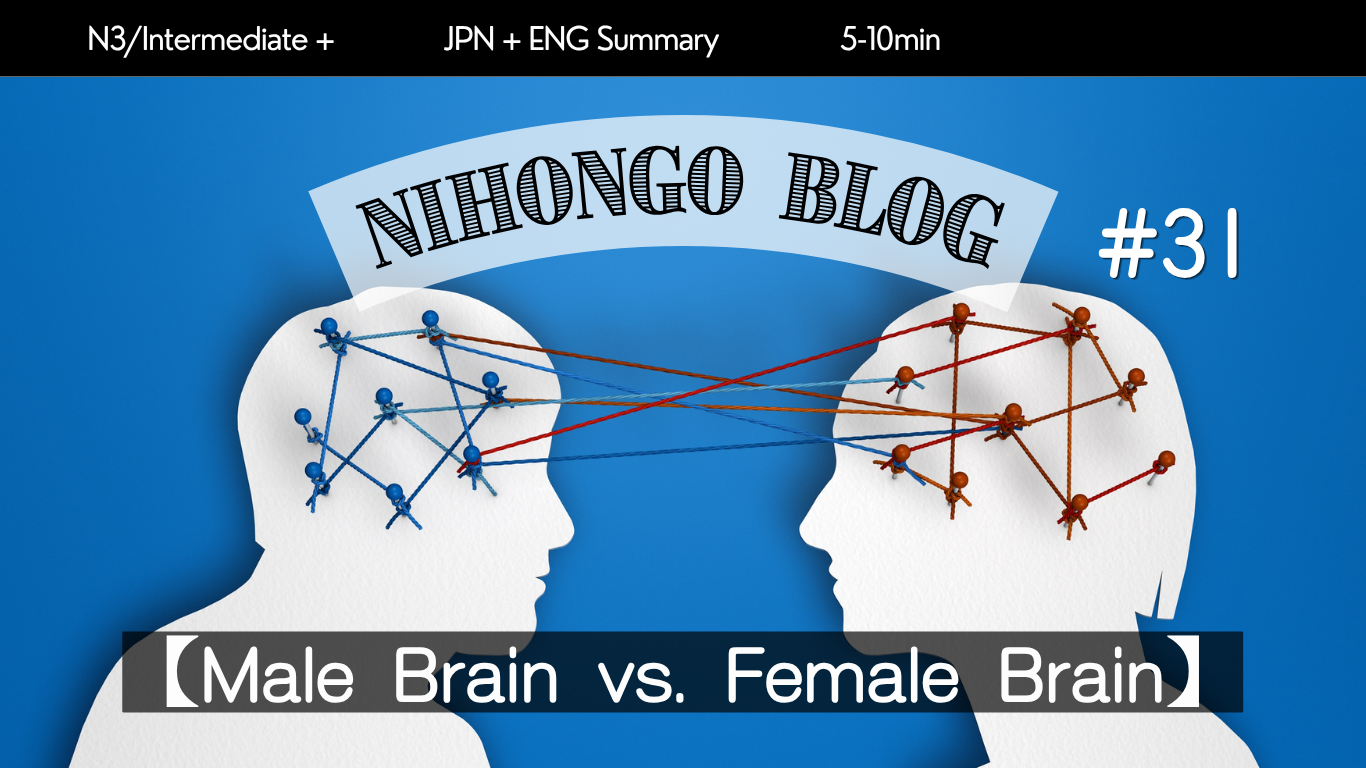

Have you ever wondered why men and women often struggle to understand each other?
Today, let’s explore how knowing these brain differences can lower your stress and improve your relationships.
解決(かいけつ)か、共感(きょうかん)か
悩み事を相談(そうだん)されたとき、あなたならどうしますか?すぐに解決策(かいけつさく)を教えますか?それとも、相手の気持ちに寄り添(よりそ)いますか?
よく言われるのは、**「男性は解決策を提示(ていじ)し、女性は共感を求める」**という違いです。この決定的な違いのために、私たちは時々、永遠(えいえん)にすれ違っているように感じることがあります。男性が良かれと思ってアドバイスをしても、女性は「ただ話を聞いてほしかっただけなのに!」と怒ってしまう……というのは有名な話ですね。
「察(さ)して脳」のやっかいさ
もちろん、すべての人がこの分類(ぶんるい)に当てはまるわけではありません。女性でも解決策をズバッと言いたい人はいますし、男性でも寄り添ってほしい時はあります。
また、性別(せいべつ)に関係なく、自分の気持ちを言わずに「相手に気づいてほしい」と願(ねが)う、いわゆる**「察してちゃん」**も存在します。これは男脳・女脳というより、「察して脳」が働いているのかもしれませんね。こうした態度は、コミュニケーションをより難しくさせてしまいます。
お互(たが)いの「解像度(かいぞうど)」を上げる
こうした違いはとてもやっかいですが、「そもそも脳の働きが違うんだ」と知るだけで、相手に対する解像度が上がります。理由がわかれば、イライラするストレスも小さくなるはずです。
結局(けっきょく)のところ、男と女という枠組み(わくぐみ)だけでなく、一人ひとりの脳の使い方が違うという前提(ぜんてい)で向き合うことが大切です。相手を観察(かんさつ)し、どう伝えればいいかを考える。それは少し面倒(めんどう)ですが、それこそが人間関係の面白さであり、**醍醐味(だいごみ)**なのかもしれません。
Summary: Understanding the Difference
While it’s commonly said that men focus on solutions and women on empathy, human communication is rarely that simple. However, understanding these basic tendencies—including the “read my mind” attitude—can significantly increase your “resolution” of others, making interactions less stressful.
By accepting that everyone’s brain works differently, we can turn the struggle of misunderstanding into a fascinating part of building deeper human connections.
Vocab List
寄り添います
・Verb G1
・よりそいます:To empathize with / To stay close to someone’s heart
例 私が泣いていると、猫がぴったりと体を寄せて、私に寄り添ってくれた。
When I was crying, the cat snuggled up close to me and stayed by my side.
提示します
・Verb G3
・ていじします:To present / To suggest
例 解決策を提示したが、相手の態度は頑なだった。
I proposed a solution, but the other party remained unyielding.
すれ違います
・Verb G1
・すれちがいます:To pass each other by / To miss each other
例 電車に乗っていたら、向こうの電車に乗っている友達とすれ違った。
While I was on the train, I passed a friend who was on the train coming in the opposite direction.
察します
・Verb G2
・さっします:To guess / To sense someone’s feelings
例 謝りたくなくてうつむいて黙っていたら、察してくれたのか許してくれた。
I didn’t want to apologize, so I just looked down and stayed silent, but they must have sensed how I felt and forgave me.
解像度
・Noun
・かいぞうど:Resolution (used here as “clarity of understanding”)
例 昔のゲームは解像度が低かったけど、それが良かった。
Old games had low resolution, but that was part of their charm.
前提
・Noun
・ぜんてい:Premise / Assumption
例 前提を揃えてから話し合いをしたほうがスムーズだ。
It’s better to make sure everyone is on the same page before we start discussing this.
醍醐味
・Noun
・だいごみ:The real pleasure / The true charm
例 日本の醍醐味は、コンビニにある。
The true charm of Japan lies in its convenience stores.






Comments