
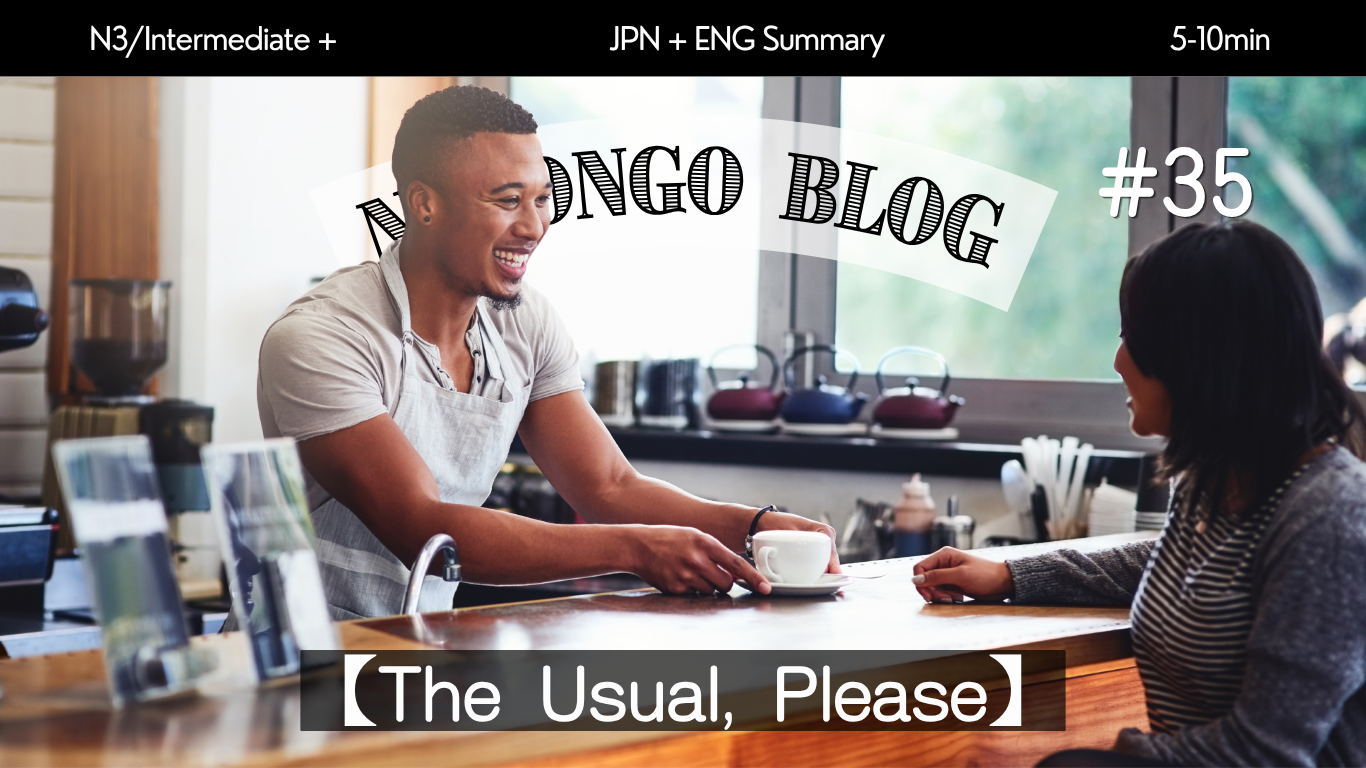
Have you ever dreamed of walking into a bar and saying, “I’ll have the usual”?
While a classic scene in movies, this phrase reflects a unique level of trust and connection in Japanese society.
「粋(いき)」な注文
みなさんには、行きつけの飲食店(いんしょくてん)はありますか? 店に入って店員(てんいん)さんに「いつものやつ、お願いします」と言って注文(ちゅうもん)が通(とお)る……。これは、とても「粋(いき)」な振(ふ)る舞(ま)いですよね。
私はどこかのお店(みせ)の常連客(じょうれんきゃく)ではないので、そんな注文をしたことはありません。私の中では、この「いつものやつ」は、ドラマや映画(えいが)、小説(しょうせつ)の中の「あるある」だと思っています。
昭和(しょうわ)の時代と「いつものやつ」
もちろん、これは全くのフィクションではありません。昔(むかし)はお店も今より少なかったし、店員さんと密(みつ)にコミュニケーションを取(と)ることは今よりも当(あ)たり前(まえ)でした。
おそらく、昭和の時代には普通(ふつう)に見られた光景(こうけい)ではないでしょうか。今でも、地元の定食屋(ていしょくや)さんやスナック、会員制(かいいんせい)のバーなどでは、いまだに「いつものやつ」で通じる常連さんがいるかもしれません。
変化(へんか)する人間関係と距離感(きょりかん)
最近では、このような注文を聞く機会(きかい)が減(へ)ったように感じます。それは、私たちの人間関係(にんげんかんけい)における距離感(きょりかん)が変わってきたからかもしれません。
現代(げんだい)の日本社会(しゃかい)では、パーソナルスペースを十分に保(たも)ちたいという心理(しんり)が強(つよ)くなっています。ある意味(いみ)では、人との関(かか)わりにおいて「潔癖(けっぺき)」な社会になってきたとも言えるでしょう。店員さんと近(ちか)すぎない距離を保つ方が、楽(らく)だと感じる人が増えているのかもしれませんね。
Summary: The Distance Between Us
The phrase “Itsumono-yatsu” symbolizes a deep bond between a customer and a shop, once common in the Showa era.
Today, however, as people prioritize personal space and maintain a more “clinical” or professional distance in social interactions, this intimate style of ordering is becoming a rarity.
Whether it’s a sign of a changing society or a loss of old-fashioned warmth, the “usual” remains a nostalgic symbol of a time when communities were more tightly knit.
Vocab List
行きつけ
・Noun
・いきつけ:One’s favorite / A place one haunts
例 このコンビニは、学校から一番近いので同級生全員の”行きつけ”だ。
This convenience store is the closest one to our school, so it’s the go-to spot for all my classmates.
常連客
・Noun
・じょうれんきゃく:Regular customer
例 このカフェは毎日行っても常連客になれなくて寂しい。
It’s sad that I can’t become a regular here even if I go every day.
あるある
・Noun / Expression
・あるある:Common occurrence / Stereotypical scenario / Something that happens all the time
例 日本人が電話を切るときに頭を下げるのは「あるある」だ。
It’s a common sight to see Japanese people bow their heads when hanging up the phone.
粋な
・Na-adj
・いきな:Chic / Stylish / Sophisticated
例 昭和の俳優は佇まいが粋でかっこいい。
Actors from the Showa era have a stylish and cool presence.
密に
・Adverb
・みつに:Closely / Intimately
例 私の親は、離婚した後も私のことで密に連絡を取り合っていた。
Even after they divorced, my parents kept in close contact regarding me.
光景
・Noun
・こうけい:Scene / Sight
例 歌手として東京ドームに立てたあの光景は忘れられない。
I’ll never forget the sight of standing on the stage at Tokyo Dome as a singer.
スナック
・Noun
・すなっく:Snack bar
例 スナックは昭和のノスタルジックな雰囲気が今の若い人にウケているらしい。
It seems that the nostalgic Showa-era atmosphere of snack bars is catching on with today’s young people.
会員制
・Noun
・かいいんせい:Membership system
例 このラジオは人気らしいけど、会員制なのでまだ聞いたことがない。
I hear this radio show is popular, but since it’s members-only, I haven’t listened to it yet.
距離感
・Noun
・きょりかん:Sense of distance (socially)
例 日本語は、話し方で心理的な距離感が変わる。
In Japanese, the way you speak can affect the psychological distance between people.
潔癖な
・Na-adj
・けっぺきな:Fastidious / Clean (often used for social distance)
例 私は潔癖なので、家に帰ったらすぐシャワーを浴びる。
I’m a bit of a neat freak, so I take a shower as soon as I get home.


Comments