
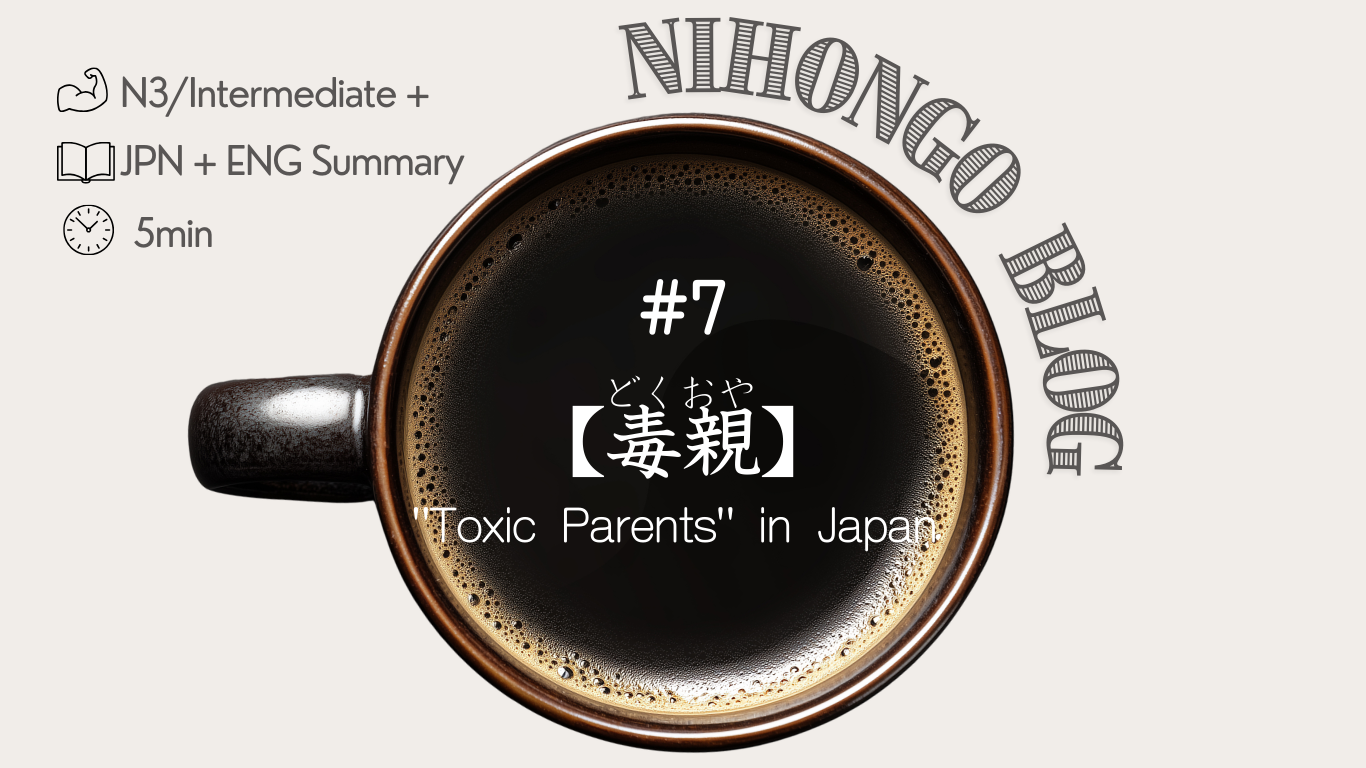
What is your definition of a “good parent”? In Japan, a term has recently gained massive attention: “Doku-oya” (Toxic Parents).
It refers to parents who negatively affect their children’s physical or mental well-being—whether through over-control or neglect. While this isn’t a new problem, giving it a “name” has sparked a huge conversation across the country. Let’s dive into this complex part of modern Japanese society.
「毒親」という言葉の誕生
皆さんは「毒親」という言葉を聞いたことがありますか?
英語の “Toxic Parents” からきた言葉ですが、今では日本のSNSやニュースで当たり前のように使われています。子どもを自分の思い通りにコントロールしようとしたり、無視(ネグレクト)したりする親のことです。
この問題は急に現れたわけではありません。昔から日本の家庭に深く根を張っていた問題ですが、名前がついたことで多くの人が「自分だけじゃなかったんだ」と共感し、大きな社会問題になりました。
「完璧な親」は存在するのか?
ある著名人が「世の中に毒親じゃない親はいない」と言っていました。
子どもが生まれた時、「こんな子に育ってほしい」と願うのは親として自然なことです。でも、子どもが成長するにつれて、親は「自分の願い」と「子どもの現実」のバランスを取らなければなりません。
自分の理想を押し付けず、子どものありのままを受け入れる……。そんな「仙人」のようなことが完璧にできる親が、一体どれくらいいるのでしょうか。
救済としての「毒親」
もちろん、はっきりとした虐待は犯罪です。絶対に許されません。
しかし「毒親」という言葉は、犯罪として警察が動けないような「グレーゾーン」で苦しんできた子どもたちを救ってきた側面もあります。「親がしんどい」と言ってもいいんだ、と自分を許せるようになったのです。私もその一人です。
これからの課題:自分軸で生きる
残念ながら、社会問題になっても毒親がいなくなることはないでしょう。親に「あなたは毒親です」と言っても、親がすぐに変わることは難しいからです。
だからこそ、子ども側が「親の軸」ではなく「自分軸」で生きていいんだ、と知ることが最も重要(肝要)です。誰がそれを教えるべきでしょうか?学校でしょうか、それともアニメや漫画でしょうか?
ENG Summary: Breaking Free from the “Toxic” Cycle
The term “Doku-oya” has shed light on the invisible struggles within Japanese households. It covers the “gray zone” of parenting that isn’t necessarily a crime but still causes deep emotional scars.
However, labeling a parent as “toxic” doesn’t automatically solve the problem. The real challenge lies in helping the children realize that they don’t have to live according to their parents’ expectations. Finding one’s own “axis” (Jibun-jiku) is the ultimate key to healing, even if the society cannot completely eliminate the existence of toxic parents.
Vocab List
定義
Noun
ていぎ:Definition
例 ”オタク”の定義は昔とは随分変わって、今ではメインストリームになった。
The definition of “otaku” has changed significantly from the past and has now become mainstream.
害を及ぼします
Expression
がいをおよぼします:To cause harm
例 過度の筋トレは害を及ぼすから、ほどほどにしよう。
Excessive weight training can be harmful, so do it in moderation.
根を張ります
Expression
ねをはります:To take root / To be deep-seated
例 姉は学生の頃に日本に移住して以来、すっかり東京に根を張って生きている。もはや日本人だ。
My sister has been living in Tokyo ever since she moved to Japan as a student. She’s put down roots here. She’s practically Japanese now.
著名人
Noun
ちょめいじん:Celebrity / Famous person
例 著名人は頭がよくて有名な人で、セレブは華やかで有名な人という違いがある。
著名人 are famous for their intelligence, while セレブ are famous for their glamour.
仙人
Noun
せんにん:Hermit / Sage (immortal being)
例 祖父は仙人のようで何にも動じない、すべてのことを受け入れ、まるで自然の一部のように生きている。
My grandfather is like an immortal sage, never flustered by anything. He accepts everything and lives as if he were part of nature itself.
俯瞰します
Verb-G3
ふかんします:To take a bird’s-eye view / To look at objectively
例 彼の写真は常に真上から俯瞰で撮られているので特徴的だ。
His photographs are always taken from a bird’s-eye view directly above, making them distinctive.
反面教師
Noun
はんめんきょうし:A bad example to learn from
例 親は私を怒鳴り散らしてきたので、それを反面教師として、私は子供と何でも話し合うようにしている。
My parents yelled at me constantly, so I use that as a cautionary example and make a point of discussing everything with my children.
立件します
Verb-G3
りっけんします:To build a legal case / To prosecute
例 簡単に言うと、”立件”は警察が捜査を始めることで、”起訴”は裁判を始めること。
Simply put, “立件” is when the police begin an investigation, while “起訴” is when a trial begins.
肝要
Na-adj
かんよう:Essential / Crucial ※「重要」より少しフォーマルな表現
例 異文化を理解する上で、先入観を持たずに接する姿勢が肝要となる。
When understanding different cultures, it is essential to approach them without preconceptions.
啓蒙します
Verb-G3
けいもうします:To educate / To enlighten ※専門的で堅い表現
例 消防署は、今年も冬の火災予防を広く啓蒙するためにポスターを配布した。
The fire department distributed posters this year to widely promote winter fire prevention.


Comments