
Have you heard the term “Kodo-Oji”? It refers to middle-aged adults living in their childhood bedrooms. Is this a practical financial choice or a lack of independence? Let’s explore this unique Japanese social phenomenon.
「こどおじ」 って 何?
最近、「子ども部屋おじさん」、略して「こどおじ」という言葉をよく聞きます。女性の場合は「こどおば」と言います。
30代や40代になっても、子供のころから使っている部屋に住み続け、親と一緒に暮らす人たちのことです。
多くの人は「大学生で一人暮らしを始めて自立する」と考えますが、実家から大学や職場が近い場合、無理に家を出る必要がありません。そのまま実家で暮らし続けるのは、日本では珍しいことではありませんでした。
「ニート」 との 違い
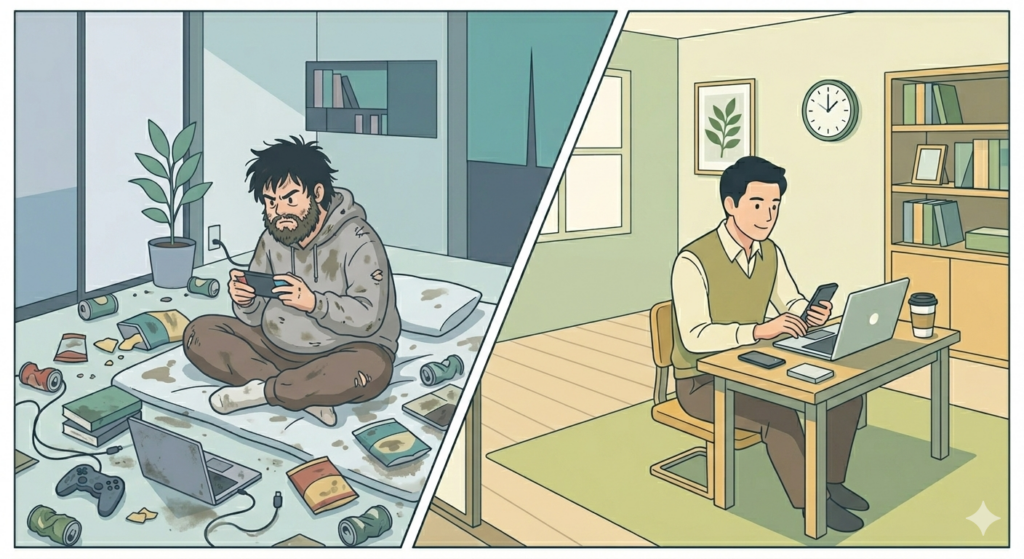
- ニート(NEET)
-
基本的に、働いていないし、学校へも行っていない人達。実家に住んでいる。
- こどおじ
-
仕事もしているし、友達や恋人もいる。実家に住んでいる「普通」の大人。
なぜ「こどおじ」 は ネガティブ に 見られる の?
経済的には問題がない「こどおじ」ですが、特に「婚活」の場面で厳しく見られることが多いようです。
- 家事が全くできないのではないか?
- 精神的に親から自立していないのではないか?
このような不安から、ネガティブなレッテルを貼られてしまうことがあります。
イメージ と リアル
でも、現実は少し違います。実家を「シェアハウス」のように考え、家賃や光熱費をしっかり払い、自分の家事は自分でする「合理的なこどおじ」もたくさんいます。
職場に近いから、お金を貯めたいから、という理由で実家にいる人も多いのです。
簡単に「こどおじ」という言葉でその人の全てを判断してしまうのは、少しもったいないことかもしれませんね。
ENG Summary: The “Kodo-Oji” Phenomenon
The term “Kodo-Oji” (short for Kodomo-beya Ojisan) describes single adults who live with their parents in their childhood rooms. Unlike “NEETs,” many Kodo-Oji are fully employed and socially active.
While they are often criticized—especially in the dating scene—for a perceived lack of independence or domestic skills, many choose this lifestyle for purely practical reasons, such as saving money or commuting convenience. In a society where family ties and economic stability are complex, is “Kodo-Oji” a problem, or just a modern way of living? What do you think?
Vocab List
名詞 実家
じっか:Parental home
例 弟は 15歳で 実家を 離れて 海外に 留学を している。
My younger brother left home at age 15 to study abroad.
G2 自立します
じりつします:To become independent
例 1人暮らしを して みて、自立する のは とても大変だ と わかった。
After living alone, I realized how incredibly difficult it is to become independent.
略して+名詞
りゃくして+名詞:Short for / Abbreviated as
例 子ども部屋おじさん、略して[こどおじ]。
The Kid’s Room Uncle, abbreviated as [Kodo-ojii].
名詞 二世帯
にせたい:Two-generation (household)
例 私の実家は 昔 二世帯住宅だった ので、小さい頃は 祖父母と 一緒に 暮らしていた。
My childhood home used to be a two-generation house, so when I was little, I lived with my grandparents.
名詞 定義
ていぎ:Definition
例 ニートの定義は ”実家に 住んでいて、仕事も 何も していない 大人” です。
The definition of a NEET is an adult who lives with their parents and does not work or engage in any productive activity.
G1 引き籠もります
ひきこもります:To withdraw / To stay indoors
例 祖父は、2年前に 腰を 骨折して から 家に 引きこもっていて、 散歩にも 行かない ので 心配です。
Grandpa has been staying home ever since he broke his hip two years ago. He doesn’t even go for walks, so I’m worried.
G2 懸念されます
けねんされます:To be concerned / worried about
例 日本旅行の懸念は地震だ。
The main concern about traveling to Japan is earthquakes.
名詞 婚活
こんかつ:Activities to find a marriage partner
例 婚活の ため に マッチングアプリを ダウンロードしました。
For matchmaking, I downloaded a dating app.
名詞 光熱費
こうねつひ:Utility bills (electricity and gas)
例 光熱費が すごく 上がった ので、 家で エアコンを 使う のが 怖くなって きました。
My utility bills have gone up so much that I’ve become afraid to use the air conditioner at home.
G1 (レッテルを)貼ります
(レッテルを)はります:To label someone (usually negatively)
例 部長は すぐに ”最近の若い人は 仕事に やる気が ない” と レッテルを 貼る。
The department head immediately labels them as “young people these days have no motivation for work.”






Comments